

Right now, in boardrooms and strategy sessions across organizations worldwide, leaders are making decisions that will fundamentally reshape how work gets done. They’re determining which roles AI will augment or replace. They’re redesigning organizational structures. They’re deciding who stays, who goes, and what skills matter for the future.
The question is: Are you in those rooms?
For HR leaders, this moment represents both an existential threat and an unprecedented opportunity. As AI transformation accelerates from theoretical to tactical, HR faces a stark choice: step forward as strategic architects of human-centered transformation, or watch from the sidelines as critical workforce decisions get made without your expertise.
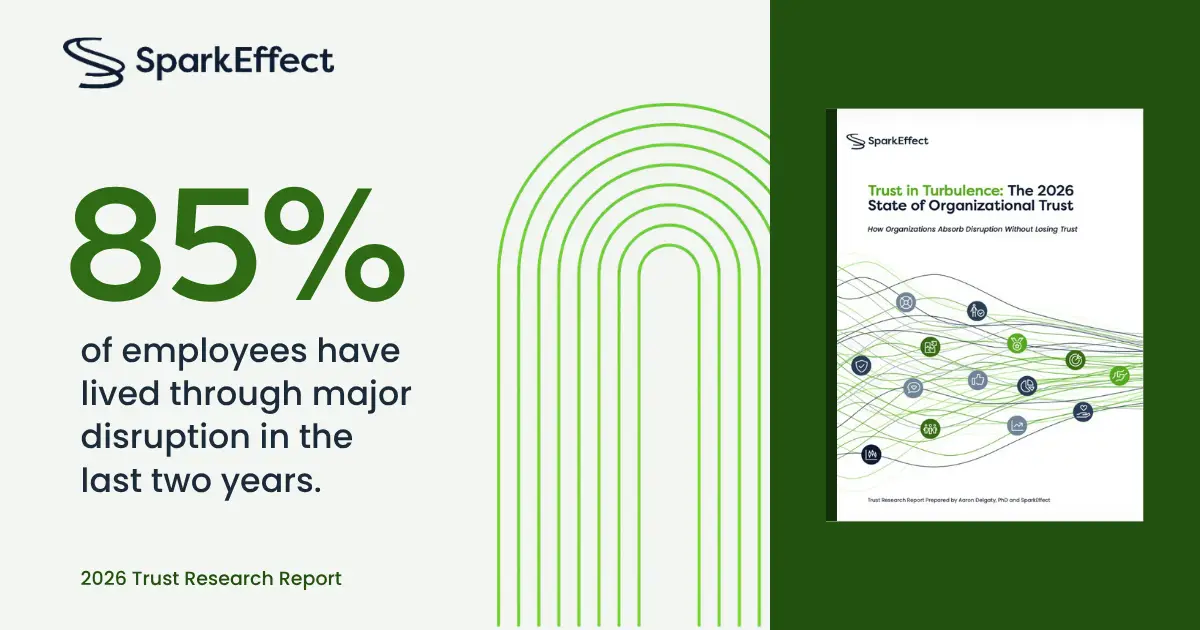
The uncomfortable truth is that many organizations are already deep into AI planning with HR nowhere near the conversation. According to recent research, while 71% of employees have experienced significant workplace disruption in the last 24 months—with AI-driven system changes being the most common—the human impact of these changes is often an afterthought rather than a design principle [1].
Yet here’s what should give HR leaders confidence: HR departments are actually leading 70% of enterprise AI experiments [2]. The opportunity isn’t theoretical—it’s happening right now, and HR has the chance to claim the leadership position.
Don't wait for an invitation that may never come.
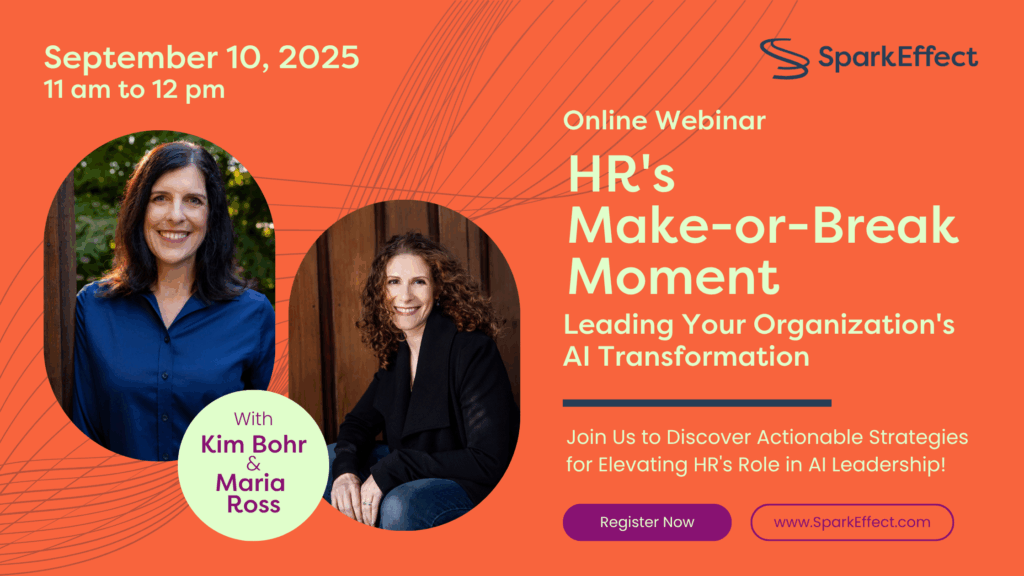
Join our exclusive web session where we’ll reveal the specific strategies HR leaders are using right now to insert themselves into AI transformation discussions and emerge as strategic drivers rather than support functions. You’ll discover how to position yourself as indispensable to your organization’s AI success—before someone else fills that vacuum.
The transformation is happening with or without HR. Make sure you’re shaping it.
Beyond the Binary: Reframing AI's Human Impact
The prevailing narrative around AI transformation has been frustratingly simplistic: robots take jobs, humans lose. This binary thinking not only limits strategic planning but also prevents HR from claiming its rightful role in shaping the future of work.
The reality is far more complex and requires HR’s unique expertise. AI transformation isn’t just about displacement—it’s about fundamental reorganization of how work happens. It touches every aspect of the employee experience: job design, team structures, skill requirements, performance metrics, career pathways, and organizational culture.
Consider what’s actually happening in organizations right now. Junior roles in law, finance, and other knowledge work sectors are disappearing as AI handles research and analysis tasks. But this creates a pipeline problem: if there are no junior associates learning the craft, where do future senior partners come from? This isn’t just a staffing question—it’s an organizational sustainability challenge that requires HR’s strategic thinking.
The scale of this challenge is massive: 38% of the workforce requires fundamental retraining within three years [3], yet only 6% of organizations have begun meaningful upskilling efforts [4]. This gap represents HR’s greatest opportunity—and biggest responsibility.
Consider Automattic CEO Matt Mullenweg’s approach to navigating AI complexity. Rather than offering simplistic promises about AI’s impact, he openly acknowledges the technology’s limitations while investing heavily in its development. “Humans are still way better at this stuff,” he noted about AI customer service, even as his company rolls out AI-powered tools across WordPress and Tumblr. His willingness to evolve publicly—shifting from “everyone should learn to code” to recognizing that AI can now “write pretty good code”—demonstrates the kind of adaptive, transparent leadership needed during transformation. But how many organizations have leaders equipped with these human skills? [13]
The Trust Imperative: What the Data Tells Us
New research from SparkEffect reveals a critical insight: when organizations handle disruption well, employee trust actually increases beyond baseline levels—what researchers call the “trust dividend.” However, when disruption is mishandled, the damage to trust can be severe and lasting [1].
The data shows that 67% of employees report improved trust when their organization handles crisis well. But for the remaining third, poorly managed change creates lasting damage. The difference between these outcomes? How human-centered the approach was [1].
Trust impacts everything HR cares about: retention, engagement, productivity, and innovation. Employees with high organizational trust are twice as likely to believe their company can navigate future disruptions successfully. They’re more likely to stay, more likely to recommend their employer, and more likely to embrace change rather than resist it.
But here’s what should keep HR leaders up at night: trust in direct managers is both higher and more fragile than trust in organizational leadership. When disruption hits, manager trust takes the biggest hit [1]. Since most employees experience their organization through their immediate manager, this represents a massive vulnerability that only HR can address through systematic leadership development and support.
The Five Human Skills That AI Can't Replace
MIT research has identified five irreplaceable human capabilities that will define competitive advantage in an AI-augmented workplace:
- Empathy and emotional intelligence – Understanding and responding to human needs and emotions
- Presence – The ability to be fully engaged and attentive in human interactions.
- Networking and connectedness – Building and maintaining meaningful relationships
- Opinions, judgment, and ethics – Making values-based decisions in ambiguous situations
- Creativity and imagination – Generating novel ideas and solutions [8]
These aren’t just nice-to-have soft skills—they’re the core competencies that will differentiate successful organizations. And here’s the critical point: developing these capabilities at scale is squarely in HR’s domain.
Yet how many organizations are systematically developing these skills? How many have even assessed their current capability gaps? Without HR driving this conversation, organizations risk automating the wrong things while failing to develop the human capabilities that actually create competitive advantage.
From Afterthought to Architect: Claiming Your Seat
The path forward requires HR leaders to fundamentally reimagine their role. This isn’t about protecting territory or defending traditional HR practices. It’s about stepping into a new kind of leadership—one that’s more strategic, more vocal, and yes, more risk-tolerant than many HR professionals are comfortable with.
The good news? Leading organizations are already recognizing this shift. Companies like ServiceNow, IBM, and Microsoft have elevated their CHROs to strategic AI leadership roles, with some like ServiceNow’s Jacqui Canney formally adding “AI Enablement” to their titles. These leaders are driving measurable results—IBM achieved a 40% reduction in HR operating budget through AI automation while JPMorgan Chase projects $1-1.5 billion in value from their HR-led AI initiatives [9].
Organizations that position HR leaders as AI strategy partners are twice as likely to achieve productivity gains above 20% compared to those following traditional IT-led approaches [10]. This people-first approach has proven essential, as successful AI transformation is 70% about people and processes, with technology comprising only 30% of the equation [11].
First, stop waiting for an invitation. If your organization is discussing AI transformation and you’re not in the room, insert yourself into the conversation. Come prepared with data about workforce implications, skill gaps, and change readiness. Frame the discussion not around protecting jobs but around optimizing human potential.
Second, expand your expertise. You don’t need to become a technology expert, but you do need to understand AI’s capabilities and limitations well enough to contribute meaningfully to strategy discussions. This means moving beyond ChatGPT as your only reference point and understanding how AI applies to your specific industry and organization.
Third, shift from reactive to proactive. Instead of waiting for leadership to hand you an AI strategy to implement, develop your own perspective on what AI transformation should look like for your organization. What’s the workforce strategy? How will you handle reskilling? What’s the change management approach? Come to the table with recommendations, not just concerns.
The Partnership Imperative
Perhaps most importantly, recognize that you can’t do this alone. AI transformation requires unprecedented collaboration between functions that have traditionally operated in silos. HR needs to partner closely with IT, finance, operations, and other functions to create integrated transformation strategies.
Some organizations are already recognizing this. Companies like Moderna and ServiceNow have created hybrid roles like “Chief People and Digital Technology Officer” and “Chief People and AI Enablement Officer,” explicitly acknowledging that human and technological transformation are inseparable [12].
But you don’t need a title change to start building these bridges. Begin by identifying allies in other functions who understand the human implications of AI transformation. Build coalitions around shared objectives. Create cross-functional teams that can approach transformation holistically rather than piecemeal.
The Window Is Closing
Here’s the uncomfortable reality: if HR doesn’t step up now, someone else will. Organizations won’t wait for HR to get comfortable with its expanded role. They’ll move forward with or without your input, and once transformation patterns are established, they’re extremely difficult to change.
We’re already seeing organizations where technology leaders are making workforce decisions, where finance is driving organizational design, where operations is determining skill requirements. These functions aren’t malicious—they’re filling a vacuum that HR has left open.
But they lack HR’s understanding of human behavior, motivation, and potential. They don’t have your expertise in change management, leadership development, or cultural transformation. They’re solving for efficiency when they should be optimizing for human capability.
The cost of HR’s absence from these conversations isn’t just professional marginalization—it’s organizational dysfunction. Without HR’s voice, companies risk creating technically elegant solutions that fail because they ignore human reality. They’ll automate the wrong processes, eliminate the wrong roles, and fail to develop the capabilities that actually matter.
Your Make-or-Break Moment
This is HR’s defining moment. The choices you make in the next 12-18 months will determine whether HR emerges as a strategic driver of organizational success or gets relegated to an administrative function managing the human casualties of poorly planned transformation.
The opportunity has never been greater. Organizations need what HR uniquely offers: understanding of human potential, expertise in organizational development, and the ability to build trust through change. But claiming this opportunity requires courage, preparation, and a willingness to operate outside traditional comfort zones.
The AI transformation is happening with or without you. The only question is whether you’ll help shape it or simply manage its aftermath. For HR leaders ready to step forward, to claim their seat at the strategy table, and to drive human-centered transformation, the time is now.
Because when HR leads with vision and insight, organizations don’t just survive disruption—they transform it into competitive advantage. And in an era where the only constant is change, that capability isn’t just valuable. It’s essential.
Sources:
[1] SparkEffect Trust Research 2025, Trust in Turbulence Report
[2] BCG Research on Enterprise AI Adoption, 2025
[3] MIT Research on Workforce Transformation and AI Impact
[4] Global Survey on Corporate AI Readiness and Implementation
[8] MIT Research on Human Capabilities in AI-Augmented Workplaces
[9] Enterprise AI Implementation Case Studies: ServiceNow, IBM, JPMorgan Chase
[10] McKinsey AI Transformation Success Factors Analysis
[11] BCG People and Process vs Technology in AI Transformation
[12] Corporate Leadership Structure Evolution in AI-First Organizations
[13] Matt Mullenweg interviews and Automattic AI Guidelines, 2024