
A practical framework for HR and business leaders making this decision
You’ve identified a leadership gap. Maybe engagement scores are slipping. Maybe a high-potential leader isn’t making the leap to strategic thinking. Maybe your bench strength looks thin for upcoming succession needs.
Now comes the harder question: What kind of intervention actually moves the needle?
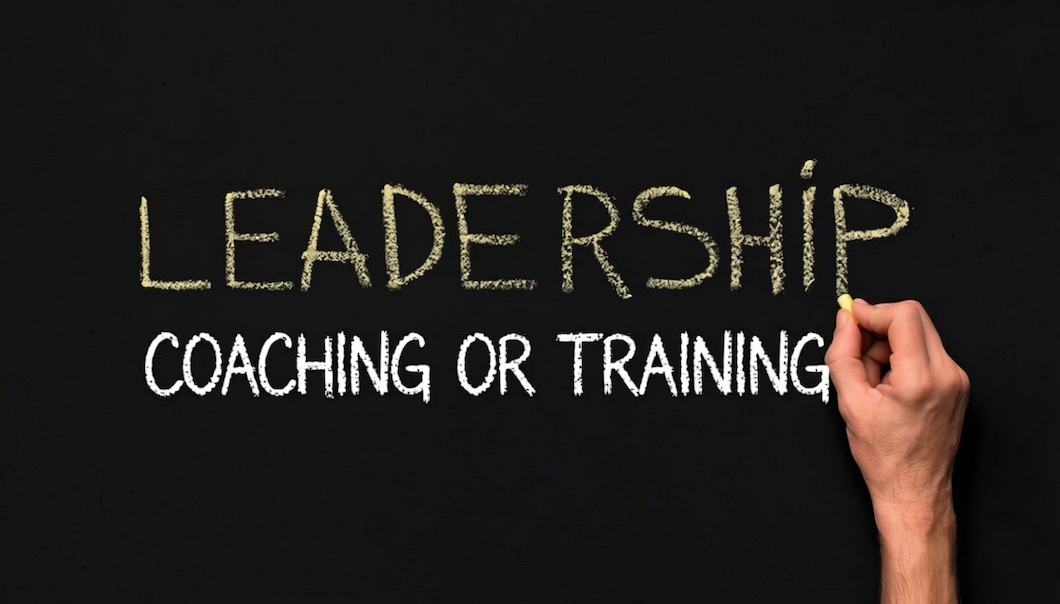
The choice between executive coaching and leadership development programs isn’t about which is “better.” It’s about matching the right approach to the specific challenge you’re trying to solve. Get this wrong, and you’ll spend budget on solutions that don’t address the real issue. Get it right, and you’ll see the kind of transformation that justifies the investment many times over.
Here’s a framework for thinking through this decision—before you ever talk to a vendor.
First, let’s be clear about what we’re comparing
Executive coaching is a one-on-one partnership between a leader and an experienced coach, typically lasting six to twelve months. The coach doesn’t transfer knowledge or teach skills directly. Instead, they use powerful questioning, honest dialogue, and sustained accountability to help leaders discover new perspectives, shift behaviors, and navigate complex challenges. The work is deeply individualized—two leaders in identical roles might have completely different coaching focuses based on their unique development needs.
Leadership development programs are structured experiences designed to build leadership capability across a cohort of leaders. They typically combine multiple modalities: assessments, classroom learning, real-world application projects, peer cohorts, and often coaching components woven in. These programs build a common leadership language and framework across the organization while preparing leaders for expanded roles.
The distinction matters because each approach works through fundamentally different mechanisms.
Coaching works through relationship. The neuroscience is clear on this: when a leader feels genuine psychological safety with their coach, their nervous system shifts from threat response to open exploration. That’s when breakthrough insights become possible—not because the coach provided them, but because the leader’s own thinking could finally go where it needed to go. As one coached executive described it: “A coach’s role is to lead you into your own revelations, perceptions, epiphanies.”
Leadership development programs work through structure and community. They create forcing functions for reflection and practice, expose leaders to frameworks they wouldn’t encounter otherwise, and build peer networks that make leadership feel less isolating. When designed well, they accelerate learning by combining expert input with experiential application.
The diagnostic question:
Is this about individual transformation or organizational capability?
Most leadership challenges fall into one of two categories, and recognizing which you’re dealing with points directly to the right intervention.
Signs you need executive coaching
The leader possesses the knowledge but struggles to apply it consistently. They’ve been through the training. They can articulate what good leadership looks like. But under pressure, old patterns resurface. This gap between knowing and doing is coaching territory—it requires sustained support to build new habits and interrupt automatic responses.
The challenge is highly individualized. Every senior leader’s context is unique: their team dynamics, stakeholder relationships, political landscape, and personal history. When the development need is deeply specific to one person’s situation, a one-size-fits-all program can’t reach it. Coaching can.
A critical transition is underway. Research consistently shows that leaders have roughly twice the chance of succeeding in role transitions when working with a coach. Whether it’s a first-time executive stepping into enterprise-level responsibility, a technical expert learning to lead through others, or a new hire navigating unfamiliar organizational culture, transitions are high-stakes moments where coaching provides essential support.
Behavior change is the goal. When a leader needs to shift how they show up—building executive presence, improving how they influence without authority, learning to delegate effectively, or recovering from derailing behaviors—coaching’s ongoing accountability proves essential. Studies show that 100% of coaching participants change in at least one way, with average participants shifting behavior in eight areas.
The leader is senior enough that peer learning has diminishing returns. C-suite executives and business unit heads face challenges their peers may not relate to. The isolation of senior leadership is real. Coaching provides a confidential space to think through challenges that can’t be discussed openly with colleagues or direct reports.
Signs you need a leadership development program
You’re seeing the same gaps across multiple leaders. When a dozen high-potentials all struggle with strategic thinking, or when your entire population of new managers lacks coaching skills, individual coaching for each person isn’t practical or necessary. A well-designed program efficiently addresses shared development needs while building cohort connections.
You’re building pipeline, not just developing individuals. Succession planning requires systematic capability building across a population of leaders. Programs create the infrastructure for this—identifying high-potentials, providing stretch assignments, and preparing leaders for roles they don’t yet hold.
The organization needs a common leadership language. When leaders across functions and levels work from different mental models of what “good” looks like, alignment suffers. Programs create shared frameworks that improve collaboration and decision-making across the enterprise.
The transition is about role expansion, not individual transformation. When a functional expert needs to develop strategic perspective and enterprise thinking—not because something is “wrong” but because their role is expanding—a structured program provides the frameworks and peer learning that accelerate this shift.
Culture change requires critical mass. Individual coaching changes individual leaders. But when you need to shift how leadership happens across the organization, you need enough leaders going through the same developmental experience to reach a tipping point. Programs create that critical mass.
A closer look at the real-world scenarios
Scenario 1: The high-potential who isn’t making the leap
Situation: Sarah is brilliant in her functional role. Her technical expertise is unquestioned. But when she’s in cross-functional meetings, she defaults to data dumps rather than strategic framing. Senior leaders see her as a strong individual contributor, not a future executive.
The question: Does Sarah need coaching or a development program?
The answer depends on the root cause.
If Sarah has never been exposed to what strategic communication looks like at the executive level—if it’s genuinely a knowledge and skill gap—a leadership development program would give her frameworks for executive communication, practice opportunities in a safe environment, and peer learning from others facing similar transitions.
But if Sarah knows what strategic communication looks like and still can’t do it under pressure, the issue runs deeper. Maybe she’s unconsciously attached to being the “smartest person in the room” and data is her armor. Maybe she’s struggling with imposter syndrome and compensating with technical credibility. Coaching would help her surface these patterns and build new ones.
In reality, many high-potentials benefit from both: a program to build strategic leadership frameworks, with coaching integrated to help them actually internalize and apply what they’re learning.
Scenario 2: The leadership team that can’t execute
Situation: Your senior leadership team has strong vision but struggles to execute consistently across departments. Silos persist. Promising initiatives lose momentum. Cross-functional collaboration breaks down during implementation.
The question: Does this team need coaching or development?
The answer: This is almost certainly a development program situation, though not exclusively.
What you’re describing is a systemic issue—the patterns exist between people, not just within individuals. A program can address the shared frameworks, alignment, and collaborative capabilities the team needs to function as a system rather than a collection of individuals.
That said, individual coaching for key players often accelerates the program’s impact. If one or two leaders are particularly stuck in old patterns, coaching can help them shift before their resistance undermines the broader effort.
Scenario 3: The newly promoted executive who’s struggling
Situation: Marcus was promoted to VP six months ago after stellar performance as a senior director. Now he’s drowning. He’s micromanaging his former peers, avoiding difficult conversations with his new peer group, and his team’s engagement scores are dropping.
The question: Coaching or development program?
The answer: This is textbook coaching territory.
Marcus doesn’t have a knowledge problem—he’s been in the organization long enough to know what good leadership looks like. He has a transition problem. The identity shift from “doer” to “leader of leaders” is one of the most challenging passages in leadership, and the specific ways Marcus is struggling (micromanaging, avoiding conflict at peer level) are uniquely his.
A coach can help Marcus understand what’s driving his micromanagement (likely anxiety about being seen as effective), build new patterns for engaging with peers, and develop the emotional capacity to have difficult conversations. The work is too personal and too urgent for a group program.
Scenario 4: The approaching succession cliff
Situation: Your analysis shows that 40% of your director-level and above positions will turn over in the next five years. Internal candidates aren’t ready to step into these roles. You’re facing a succession crisis.
The question: Coaching or development?
The answer: You need a comprehensive leadership development program with coaching woven in.
This is fundamentally a pipeline problem. You need to build leadership capability across a population, not transform a handful of individuals. A structured program can identify high-potential talent, accelerate their readiness, and create the bench strength you need.
But the most effective programs integrate coaching as a component—giving participants individual support to apply program learning, process what they’re discovering about themselves, and navigate the specific challenges in their real-world contexts.
What the research tells us
The data supports what practical experience suggests: both approaches work, but for different purposes.
Executive coaching consistently shows strong ROI for individual leader development. Studies cite returns of seven to one on coaching investment, with coached leaders showing improved relationships with direct reports (77%), supervisors (71%), and peers (67%). The effects are particularly pronounced during transitions—one study found that successful senior transitions yield 90% higher likelihood that teams meet three-year performance goals.
Leadership development programs show more variable results, largely because quality varies dramatically. Only 20% of organizations believe they’re effective at developing great leaders, and 75% rate their leadership development programs as “not very effective.” But organizations with well-designed, consistent approaches are nearly four times more likely to rate their programs as effective—and they see comparable returns on investment.
The most important finding may be this: organizations that make meaningful progress on leadership development are nearly twice as likely to achieve both their business and human outcomes. The question isn’t whether to invest in leadership capability—it’s how to invest wisely.
Making the decision: A practical framework
When you’re facing a leadership challenge, work through these questions:
- How many people share this development need? One person, or a handful → Lean toward coaching. A cohort or population → Lean toward a development program.
- What’s the nature of the gap? Knowledge and skill (they don’t know what to do) → Program. Application and behavior (they know but can’t consistently do) → Coaching. Both → Program with integrated coaching.
- How critical is the timing? Urgent individual situation → Coaching (can start immediately). Building long-term capability → Program (worth the time to design well).
- What outcome are you optimizing for? Individual transformation → Coaching. Organizational capability → Program. Both → Blended approach.
- What’s the leader’s career stage? Emerging leaders transitioning to strategic roles → Often program-first. Established leaders driving strategy through others → Often coaching or program-and-coaching. Senior executives leading enterprise transformation → Often coaching.
The real answer is usually “both, thoughtfully sequenced”
Here’s what we’ve learned from years of this work: the most impactful leadership development doesn’t treat coaching and programs as either/or.
Organizations that get this right often start with a structured program to build foundational capabilities and shared frameworks, then layer in coaching to help leaders actually internalize and apply what they’re learning. Or they identify critical individuals who need coaching support first to unlock their ability to benefit from broader development experiences.
What doesn’t work is defaulting to the same intervention for every situation. Sending someone to a program when they need individualized coaching wastes their time and yours. Providing expensive coaching when a cohort shares the same development need is inefficient.
The question isn’t “which is better?” It’s “what does this specific situation actually require?”
One final thought
Leadership development isn’t just nice to have—current research shows 77% of organizations are experiencing a leadership gap, and 71% of leaders report increased stress levels. The stakes are real. The question is whether you’re matching the right investment to the right challenge.
Whatever you decide, look for partners who ask good diagnostic questions before recommending solutions. The best providers—whether they specialize in coaching, development programs, or both—will help you think through what your situation actually requires rather than defaulting to what they happen to sell.
That kind of honest conversation is what separates genuine development partners from vendors moving product.
How SparkEffect Approaches This Decision
At SparkEffect, we’ve built our practice around the principle that transformation happens through relationship—and that the right intervention depends entirely on your specific situation.
We offer both executive coaching and structured leadership development programs because we’ve seen too many organizations forced into one approach when they actually needed the other. Our three-tiered Accelerator programs—Readiness for emerging executives, Impact for leaders of leaders, and Executive for senior leaders shaping enterprise direction—each integrate coaching within a structured development framework. And for situations that call for dedicated one-on-one support, our coaching engagements pair leaders with ICF-certified coaches averaging ten-plus years in business roles and eight-plus years of coaching experience.
What sets us apart is how we approach the diagnostic conversation before recommending anything. Our discovery process examines your organizational context, culture, and specific leadership challenges to identify whether coaching, a development program, or a blended approach will actually move the needle. We’re not interested in selling you what we have—we’re interested in solving what you’re facing.
We call our approach “smarts + hearts” because we believe effective leadership development requires both strategic rigor and genuine human connection. Our coaching philosophy centers on creating the psychological safety that allows leaders to do their real work: surfacing the patterns that limit them, building new habits under pressure, and ultimately showing up differently with their teams.
The result is leadership development that doesn’t just transfer knowledge but actually changes behavior—and organizations that build sustainable leadership capability rather than checking a development box.
Ready to think through what your situation requires? We’d welcome a conversation about your leadership challenges—with no assumption about where that conversation leads. Contact us to schedule a discovery conversation.
SparkEffect partners with organizations to develop leaders at every level through executive coaching and leadership development programs. Learn more at sparkeffect.com
What leadership challenges are you currently facing? The distinction between “knowing what to do” and “actually doing it” often points directly to the right intervention.