

Why Your Executive Team's Emotional Intelligence ROI Beats Any Algorithm
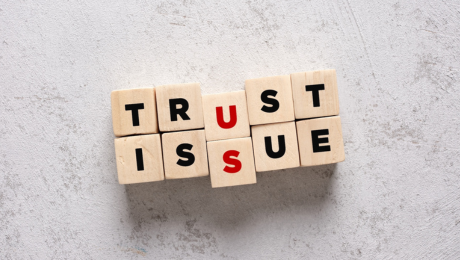
Every CHRO knows this scenario: Your succession plan looks perfect on paper. High-potential directors have stellar performance reviews. Leadership development budget is fully deployed. Then crisis hits, and everything falls apart. Strategic initiatives stall in endless meetings. Cross-functional collaboration dissolves into finger-pointing. Your emerging leaders freeze instead of stepping up. You’re witnessing the challenges that emerge when trust is strained—an area rarely captured by performance metrics but critical for organizational resilience—and it’s costing you more than any algorithm can calculate.
The Strategic Trust Question Every Leader Must Answer
When organizational trust breaks down, the costs cascade through every business metric that matters. Through our work with hundreds of leaders across industries, we’ve observed a consistent pattern: when executives master trust as strategic capital, their organizations demonstrate remarkable resilience and performance advantages.
Organizations recognized for fostering high trust often report significant improvements in revenue growth, productivity, and innovation compared to those where trust is less emphasized. But here’s what’s often missed: trust isn’t merely a skill to manage—it represents strategic capital that organizations build or erode collectively through leadership dynamics.
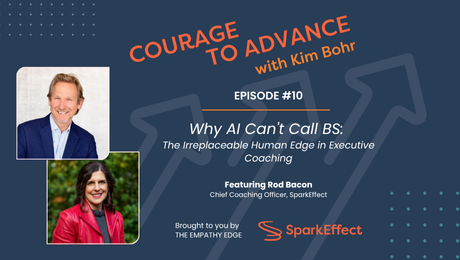
“Trust is the new strategic capital,” explains Rod Bacon, Chief Coaching Officer at SparkEffect, who spoke to Kim Bohr on a recent episode of our Courage to Advance podcast. “It’s the interstitial connections that hold everything together.” Unlike traditional capital that appears on balance sheets, trust creates the organizational conditions where strategy can actually execute—or where it dies in endless meetings and water cooler conversations.
Beyond Team Building: The Neuroscience of Strategic Trust
Trust remains an essential element within leadership development, interconnected with other strategic competencies. Through our executive coaching practice, we’ve discovered that trust isn’t just a team dynamic—it’s the neurological foundation that enables strategic thinking under pressure.
By understanding and facilitating what neuroscience researchers call “interpersonal synchronization,” leaders can foster environments conducive to innovation and strategic thinking. Mirror neurons create resonance between leaders and their teams, regulating stress responses and enabling the kind of higher-order thinking required for complex problem-solving.
“AI can ask the powerful question,” Rod explains, “but AI can’t synchronize a nervous system.” This human capability enables teams to navigate uncertainty together rather than fragmenting under pressure.
This isn’t about making leaders more likeable. It’s about creating the neurological conditions where strategic thinking and collaborative execution become possible under pressure. When leaders show up calm and present during times of adversity, they literally help regulate the stress responses of everyone around them. The prefrontal cortex—critical for decision-making and strategic thinking—only functions optimally when trust is present, enabling teams to think strategically rather than reactively.
SparkEffect Principles On Where Trust Meets Transformation
1. The Human Advantage: Connection That AI Cannot Replicate
Leaders who understand trust as strategic capital can regulate their nervous systems to create space for breakthrough thinking—both for themselves and their teams. Unlike AI-driven analytics, human presence creates the interpersonal connection that enables collective problem-solving under pressure.
When Rod coached a biotech executive through a challenging period, he didn’t provide answers—he created the regulated presence that allowed her nervous system to calm and access the strategic thinking she needed. “That’s what I needed,” she said after a brief moment to pause and breathe transformed her entire approach to the crisis.
This is the Human Advantage: the irreplaceable capacity to create the neurological conditions necessary for transformation.
2. Growth Through Challenge: Sacred Pressure That Builds Trust
Rod calls this “sacred pressure”—the kind of supportive challenge that builds rather than erodes trust. “We have a strong belief that tension is required for transformation,” explains Kim Bohr, SparkEffect’s President and COO. This productive tension must be applied with the interpersonal attunement that creates safety.
Consider Rod’s work with a hospital CEO discussing accountability. When Rod asked, “Are you modeling that same accountability?” and paused meaningfully, the CEO recognized his own inconsistency: “You’re not going to let me off the hook, are you?” That productive challenge built trust in the coaching relationship while creating breakthrough insight.
Strategic vulnerability through calibrated challenge builds stakeholder confidence rather than eroding it.
3. Leadership Through Relationships: Trust as Force Multiplier
“Teams move at the speed of trust, and organizations move at the speed of their teams,” Rod observes. Leaders who master trust as strategic capital understand that their effectiveness depends entirely on relationship networks and stakeholder confidence.
As Rod puts it, “If you don’t have trust, you’re not going to be able to challenge each other. Teams end up having the real conversations at the water cooler instead of in the meetings where decisions get made.” This creates false commitments and execution gaps that destroy strategic momentum.
Trust enables leaders to influence through authentic connection rather than positional authority—the foundation for enterprise-wide impact.
4. Coaching Culture Development: Trust Multiplication at Scale
Effective leaders actively cultivate trust across their organizations, establishing it as a foundational element of their leadership style. “When you can start to share that you’re also human, you’re fallible, you don’t have it all together,” Rod explains, “that’s when you can start to actually resource yourself and be more effective.”
These leaders systematically translate trust-building insights into consistent behaviors that stakeholders can observe and measure, creating ripple effects throughout the organization.
The Strategy-Execution Gap: Where Trust Becomes Critical
This gap costs organizations more than money. It costs strategic momentum, competitive advantage, and leadership pipeline strength. The missing piece is often trust: the strategic capital that enables leaders to influence beyond their direct authority and navigate complexity through human connection.
Consider these scenarios from our coaching practice:
Scenario A: A pharmaceutical VP has the right strategy but struggles with cross-functional buy-in. Teams commit in meetings but have the real conversations afterward. Initiatives lose momentum in implementation because trust is missing.
Scenario B: A healthcare director excels technically but can’t influence senior stakeholders. Despite strong performance reviews, they’re passed over for promotion because they lack the interpersonal presence that creates confidence in their strategic judgment.
The difference isn’t competency—it’s the ability to build and leverage trust systematically. Leaders in successful scenarios learn to build strategic trust that enables enterprise-wide influence. Those who remain stuck continue optimizing tactics while strategy stalls
The Measurable ROI of Strategic Trust
Smart companies don’t hire SparkEffect to just feel good about trust-building. They hire us because leaders who master trust as strategic capital consistently drive better strategic execution and measurable business outcomes.
Organizations with coaching cultures that emphasize trust development demonstrate significant competitive advantages: enhanced revenue growth, improved profit margins, and substantially better crisis resilience compared to organizations focused primarily on technical skill development.
But here’s what separates trust-as-strategic-capital from traditional team building: it’s measurable, systematic, and directly connected to business outcomes.
The hidden costs of low trust compound quickly: increased turnover (costing 50-200% of annual salary per replacement), slower innovation cycles, reduced customer loyalty, and decreased organizational resilience during market disruption. High-trust organizations consistently outperform across every meaningful business metric—not because they’re “nicer,” but because they’ve mastered the strategic capital that enables execution under pressure.
The SparkEffect Approach: Meeting Trust Where It Lives
We meet leaders exactly where they are in their journey from functional expertise to enterprise-wide influence, developing the trust-building capabilities that AI cannot replicate and competitors cannot automate.
Instead of a generic approach, our assessment methodology specifically measures the trust capabilities that enable leaders to close the strategy-execution gap. Our three-tier approach addresses different stages of trust development:
Executive Readiness Accelerator:
For emerging executives learning to build trust beyond functional expertise, developing the interpersonal presence and strategic vulnerability that creates enterprise-wide influence.
Impact Accelerator:
For established leaders who must translate vision into execution while building trust across multiple stakeholder groups and organizational levels.
Executive Accelerator:
For senior leaders shaping organizational transformation, mastering trust as strategic capital at enterprise scale while navigating complex change initiatives.
The Competitive Advantage Hidden in Plain Sight
While competitors invest in AI to optimize analytical processes, forward-thinking organizations are making a different bet: they’re developing leaders who can create the human conditions where strategic execution flourishes.
This creates sustainable competitive advantage because trust-building cannot be automated, outsourced, or replicated by technology. The interpersonal connection that creates breakthrough moments, the sacred pressure that drives growth, the authentic vulnerability that builds stakeholder confidence—these uniquely human capabilities become more valuable, not less, in an AI-enhanced world.
Your Strategic Next Step
Ready to illuminate how trust becomes your competitive advantage? Let’s start with achievable goals that align with your long-term vision. During a complimentary consultation, we’ll explore how SparkEffect’s proven methodology can help your leaders develop the trust-building capabilities that enable strategic execution step by step.
The question for leaders isn’t whether trust matters for organizational performance. The question is whether you’re ready to develop it as a measurable strategic capability that drives competitive advantage.
Together, we can transform your organization’s approach to trust—not overnight, but through practical, targeted approaches that address your specific challenges while building toward sustainable excellence.

SparkEffect’s Executive Coaching Accelerator Suite specifically develops leaders who can leverage trust as strategic capital—creating the human foundations that enable transformation while driving measurable business outcomes. For 40+ years, we’ve guided hundreds of leaders through the critical transition from functional expertise to enterprise-wide influence. We meet leaders exactly where they are and help them lead where their company is going.
References
[1] Harvard Business Review: “How Leaders Build Trust”
[2] Harvard Business Review: “The Neuroscience of Trust”
[3] Center for Creative Leadership: “How to Instill a Coaching Culture”
[4] Center for Creative Leadership: “Why Leadership Trust Is Critical in Times of Change”
[5] The Source: “How New Leaders Build or Lose Trust Over Time”
[6] PsicoSmart: “The Hidden Cost of Distrust: Analyzing Financial Implications of Low Trust”
[7] American Management Association: “Raising Trust Capital”